
The hotel and resort industry is undergoing one of its most significant shifts in decades. Guests today are not simply looking for a comfortable room or villa — they are seeking experiences that align with their values, support their wellbeing, and feel genuinely distinctive. For hotel operators, resort developers, and interior design studios, this raises a direct and practical question: how do you design spaces that meet those expectations while still delivering commercial performance?
The answer lies in understanding the three forces reshaping hospitality design right now — and knowing where soft furnishings fit into each of them.
The hotel and resort design trends of 2025 are blending heritage, luxury, and sustainability, with a strong focus on creating immersive and emotionally engaging spaces. Properties that understand this shift are investing accordingly. Those that don’t are being left behind by guests who have more choice than ever.
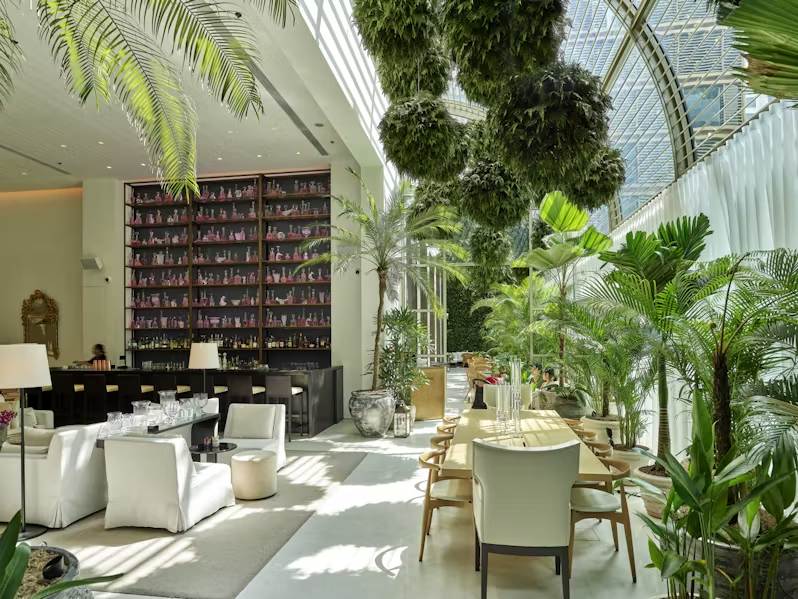
Wellness Integration: Designing Spaces That Restore as Well as Accommodate
Wellness has moved from a spa add-on to a core design philosophy. Leading designers note that wellness is no longer just a trend — it has become a fundamental expectation for guests. This has significant implications for how every zone of a hotel or resort is specified, from guest rooms and villas to communal areas and outdoor spaces.
Biophilic design is at the centre of this shift. Nature-inspired interiors continue to dominate hospitality design, with hotels and resorts integrating natural materials, greenery, and organic textures — living walls, indoor gardens, and earthy colour palettes — to create a genuine sense of wellbeing. In soft furnishings terms, this translates into material choices that support the biophilic narrative: natural fibres, tactile weaves, and earthy tones that reinforce a connection to the environment rather than working against it.
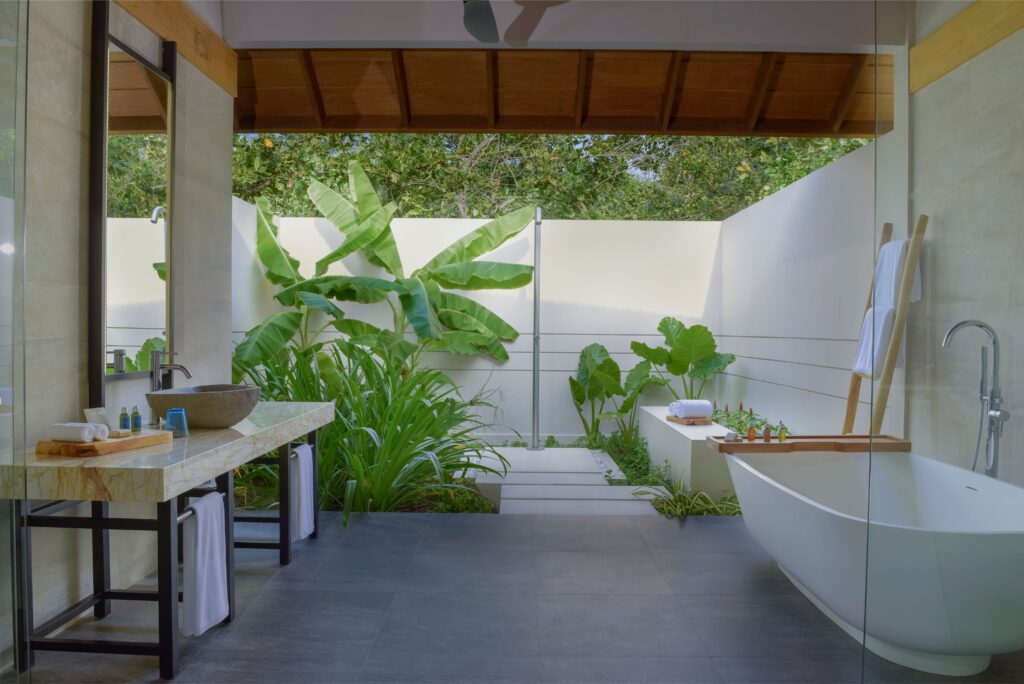
Beyond materials, the physical configuration of wellness spaces matters. Yoga studios, meditation areas, and spa-inspired bathrooms are increasingly expected at mid-to-upper tier hotels and resorts. In guest rooms and villas, details like blackout curtains for sleep quality, breathable natural-fibre bedding, and layered window treatments that allow guests to control light and mood are becoming specification standards rather than luxury differentiators.
Hospitality interior trends are embracing a careful balance — using colour and tone to create soothing environments, with texture playing a crucial role: silks, velvets, wools, and linens layered across furniture and accessories to create an effect that is both eclectic and harmonious. For a soft furnishings manufacturer, this is precisely the brief we work to — material combinations that feel considered rather than generic, and that hold their integrity across years of commercial use.
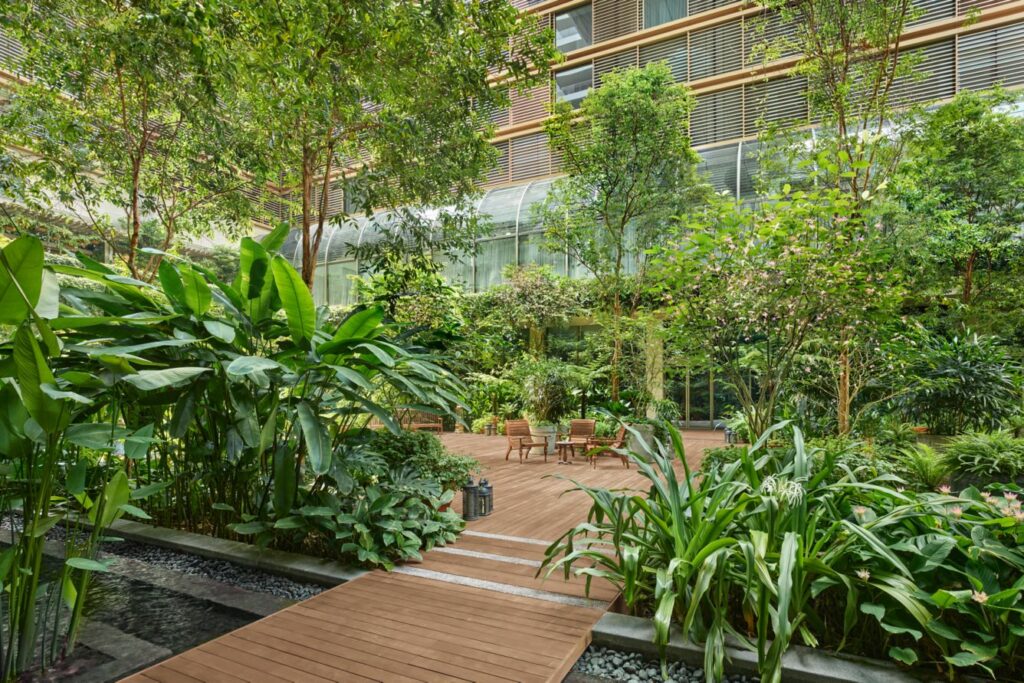
Technology-Driven Guest Experiences: Where Smart Design Meets Soft Furnishings
Hotel and resort technology adoption is accelerating, with 78% of hoteliers planning to increase their technology budgets in the next three years. But the most effective tech integrations in hospitality are the ones guests barely notice — seamlessly embedded into the environment rather than bolted on as afterthoughts.
Smart room controls are a prime example. Guests who can adjust lighting temperature, manage blackout curtains, and personalise their in-room environment from a single interface are experiencing technology through soft furnishings. Motorised drapery systems, acoustically specified upholstery that reduces sound transmission, and outdoor textiles selected for both performance and sensory comfort — these are the points where technology specification and soft furnishings specification intersect.
As artificial intelligence and automation advance, successful hotel and resort design will need to balance technology with human-centred experiences. The physical warmth of a well-specified soft furnishing — the weight of a curtain, the texture of an upholstered chair, the quality of resort outdoor cushioning — is precisely what provides that human-centred counterbalance to a tech-enabled environment. The two are not in competition; they are complementary.
Sustainable Hotel and Resort Design: Material Choices That Reflect Genuine Responsibility
Sustainability is no longer optional in hospitality — it is integral to the guest experience and the development process, with hotels and resorts weaving sustainable practices into their brand narratives as a competitive advantage.
For hotel and resort operators and design studios, this means scrutinising the supply chain behind every material specification. Sustainable soft furnishings for hotels and resorts involve recycled and organic fabric options, suppliers who prioritise responsible sourcing, and textile care approaches that reduce water and chemical use over a product’s lifetime. Sustainability in action means giving new life to old materials, collaborating with local artisans, and sourcing regionally to minimise environmental impact — strategies that weave cultural heritage into each project while reducing waste and supporting local economies.
Practically, this also means specifying for longevity. The most sustainable soft furnishing is one that does not need replacing in two years. Selecting commercial-grade fabrics with high durability ratings, UV resistance for outdoor resort applications, and colourfastness that holds across repeated cleaning cycles is both an environmental decision and a sound financial one.
What This Means for Your Next Hospitality Project
The future of hotel and resort interior design is not about chasing individual trends — it is about understanding the underlying shift in what guests value, and making specification decisions that serve those values durably and consistently. Wellness, technology integration, and sustainability are not three separate workstreams. In a well-designed property, they reinforce each other — and soft furnishings are one of the most effective tools for bringing all three together in a cohesive, guest-facing way.
At Ecodec, we work with resort developers, hotel and resort operators, and interior design studios across Singapore, the Maldives, Australia, and beyond, to specify and manufacture hospitality soft furnishings that are built for the demands these trends create — commercially durable, design-coherent, and delivered on project timelines.
Frequently Asked Questions
How do soft furnishings contribute to wellness hotel and resort design?
Soft furnishings directly influence the sensory experience of a space — through material texture, acoustic properties, light control via window treatments, and the tactile quality of upholstery and bedding. Specifying natural fibres, breathable fabrics, and layered window treatments that give guests control over light and privacy are practical ways soft furnishings support a wellness design brief.
What are sustainable soft furnishings for hotels and resorts?
Sustainable hospitality soft furnishings are those specified with responsible sourcing, long service life, and reduced environmental impact in mind. This includes recycled and organic fabric options, suppliers with transparent supply chains, and material choices that maintain their performance and appearance over years of commercial use — reducing the frequency and cost of replacement.
How does biophilic design apply to hotel and resort soft furnishings?
Biophilic hotel and resort interiors use natural materials, organic textures, and earthy palettes to create a connection with the natural environment. In soft furnishings, this means selecting fabrics and materials — linens, wools, natural weaves — that complement the biophilic narrative of a space and contribute to its overall sense of calm and restoration.
Designing for wellness, sustainability, or a full property refresh? We’d love to be part of your next project — get in touch at biz@ecodec.sg